
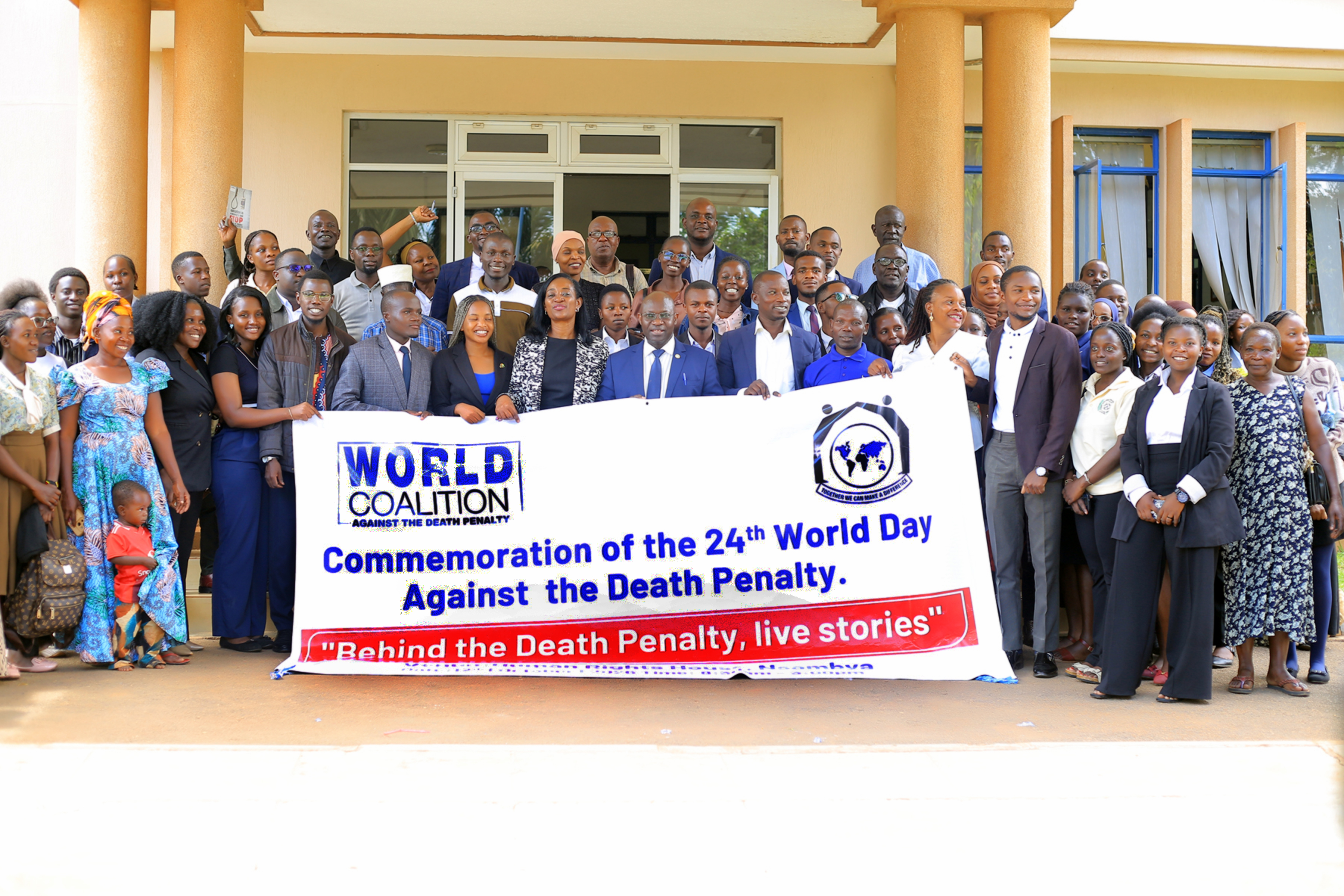
The Foundation for Human Rights Initiative (FHRI), in partnership with the Uganda Coalition Against the Death Penalty on 12th October 2026, commemorated the 24th World Day Against the Death Penalty at the Human Rights House. Held under the theme “Stories for Life,” the event brought together representatives from universities, civil society organisations, the Uganda Prisons Service, former death row prisoners, children of persons sentenced to death, and other stakeholders committed to advancing the campaign for the abolition of the death penalty.
Participating institutions included the Uganda Prisons Service, Calsaar Safaris, Cavendish University, Makerere University, Metropolitan International University, Wells of Hope, King Caesar University, Islamic University in Uganda, Kampala International University, St. Egidio and Bugema University, among others.
The theme provided a platform for individuals with lived experiences of the death penalty to share their personal testimonies, highlighting the human impact of capital punishment and contributing to the ongoing national conversation on its relevance and effectiveness.
Rethinking the Purpose and Effectiveness of the Death Penalty
In his opening remarks, Dr. Livingstone Sewanyana, Executive Director of FHRI, highlighted the continued occurrence of gruesome murders in Uganda despite the death penalty remaining enshrined in the country's laws. He questioned whether capital punishment effectively deters crime, observing that the relationship between the death penalty and crime reduction remains inconclusive. Experiences from countries that have abolished capital punishment continue to challenge the assumption that retaining it necessarily prevents serious crime.
Dr. Sewanyana posed a fundamental question: Does the death penalty serve its intended purpose?
He challenged the perception that advocating for the abolition of the death penalty amounts to being insensitive to victims of crime. Instead, he called for a broader examination of the underlying causes of criminal behaviour and consideration of whether alternative approaches to justice, accountability, reform and rehabilitation could better achieve the objectives of punishment.
To strengthen evidence-based advocacy, FHRI commissioned IPSOS, a research organisation, to undertake research on the subject. The research is intended to contribute to informed public discourse and support engagement with policymakers.
In their findings that were shared, IPSOS observed that the death penalty continues to generate contrasting approaches to justice and accountability globally. According to Amnesty International's Death Sentences and Executions 2025 report, 113 countries had abolished the death penalty for all crimes. Across Africa, countries have pursued different legal pathways towards abolition. South Africa abolished capital punishment through the landmark Constitutional Court ruling in S v Makwanyane (1995), while Rwanda achieved abolition through legislation in 2007.
These experiences provide important reference points for Uganda as it reflects on how national policy, constitutional protections, public safety, and the rights and needs of victims and their families should inform the future of capital punishment.
Dr. Sewanyana reaffirmed FHRI's commitment to sustained advocacy, including engagement with policymakers to reconsider Uganda's retention of the death penalty. He also emphasised the importance of placing young people at the centre of the campaign, recognising their potential to influence future perspectives and shape society. Through awareness-raising and empowerment initiatives, FHRI and its partners seek to equip young people with the knowledge and understanding necessary to participate meaningfully in the debate.
Legal Reforms and Developments in Uganda
Dr. Sewanyana highlighted key reforms in Uganda's administration of the death penalty following the landmark Susan Kigula and 417 Others case. These include the abolition of mandatory death sentences, the introduction of mitigation hearings, and strengthened avenues for clemency and constitutional redress.
He also cited the reported decline in Uganda's death row population from 417 to 105 prisoners, alongside growing global momentum towards abolition. These developments reflect progress in limiting the application of capital punishment and strengthening fair, individualised sentencing.
The Prison Perspective: Rehabilitation and Human Dignity
Representing the Officer in Charge of Upper Prison, Luzira, the Uganda Prisons Service, Mr. Samuel Kiribire, Rehabilitation Officer, appreciated the partnership and acknowledged the progress made through the campaign.
He observed that prisoners on death row often live under constant fear and psychological distress because the death sentence remains legally applicable, even after prolonged periods without executions.
He called for intensified public awareness, noting that many people remain unfamiliar with the law and its implications. He further emphasised the need to giveips greater attention to rehabilitation and correction within the justice system, highlighting their potential to support reform and reintegration, in contrast to the irreversible nature of the death penalty.
Stories for Life: Voices from Former Death Row Prisoners
In keeping with this year's theme, five former death row prisoners shared their personal experiences and perspectives on capital punishment. They included Ms. Nakanja Ruth, Ms. Bukirwa Robinah, Mr. Osuman Kintu, Ms. Claire Kabubu and Mr. Kalyango Misusera.
The speakers recounted their experiences of being sentenced to death, the challenges they endured while imprisoned, and the circumstances surrounding their eventual release. Their testimonies offered a deeply human perspective on the realities of death sentences and the implications of their administration.
Participants called for greater public awareness of the law and the consequences of criminal conduct. They stressed the importance of thorough investigations and reliable evidence in preventing wrongful convictions, highlighting the profound pain and humiliation of serving a sentence for a crime one did not commit.
They also called for improved access to medical care for prisoners and greater respect for human dignity within correctional facilities.
The testimonies reinforced the importance of due process, fair trials, accountability and safeguards against irreversible miscarriages of justice.
Poetry and the Power of Young People's Voices
Adding a creative dimension to the commemoration, Ms. Connie Numbi, Manager of the Death Penalty Campaign at FHRI, presented a poem titled “The Death Penalty Is Not Justice,” conveying the message that capital punishment should not be equated with justice.
Young people representing participating universities and organisations expressed optimism that progress towards abolition remains possible. They urged FHRI and its partners to broaden and deepen the campaign by reaching more communities, strengthening public awareness and building wider support for the abolition of the death penalty.
Addressing the Root Causes of Crime
The discussions also explored the underlying social and economic conditions that may contribute to criminal behaviour, including poverty, economic despair and limited awareness of the law.
Participants called on policymakers and other stakeholders to look beyond punitive measures and address the broader circumstances associated with crime. They emphasised that effective crime prevention requires public education, stronger investigative systems, fair administration of justice and interventions that tackle the root causes of offending.
Renewed Commitment to Evidence-Based Advocacy
The commemoration highlighted the importance of critically examining the effectiveness of the death penalty, upholding human dignity and strengthening justice systems. Through personal testimonies, stakeholder engagement and evidence-based discussions, FHRI and its partners renewed the call for greater public awareness, meaningful policy dialogue and reconsideration of Uganda's position on capital punishment.
In his closing remarks, Dr. Sewanyana acknowledged the support of the European Union, the World Coalition Against the Death Penalty, and, particularly, the former death row prisoners whose courage in sharing their lived experiences continues to enrich and strengthen the campaign.
As the world marks the 24th World Day Against the Death Penalty, the stories shared at the Human Rights House serve as a reminder that conversations about justice must remain centred on human dignity, accountability, fairness and the value of life.